Guide · Planning permission
Do I need planning permission for an extension in Cornwall?
Many extensions don’t need a planning application, thanks to permitted development rights. Here’s how the limits work, why they’re tighter across much of Cornwall, and when it’s worth applying anyway.
Not always. Many single-storey extensions, and some two-storey ones, can be built without a planning application under what are called permitted development rights. But the limits are precise, a large part of Cornwall has tighter rules, and many homes have had their rights removed without the owners realising.
What permitted development means
Permitted development rights let you extend a house without applying for planning permission, as long as the extension stays within set limits. They’re national rules, so they’re the same in Cornwall as across the rest of England. They apply to houses only: flats and maisonettes don’t have them.
The limits are measured from the “original house”, meaning the house as it was first built, or as it stood on 1 July 1948 if it’s older than that. Extensions added since then, including ones built by previous owners, count against your allowance.
The main limits for house extensions
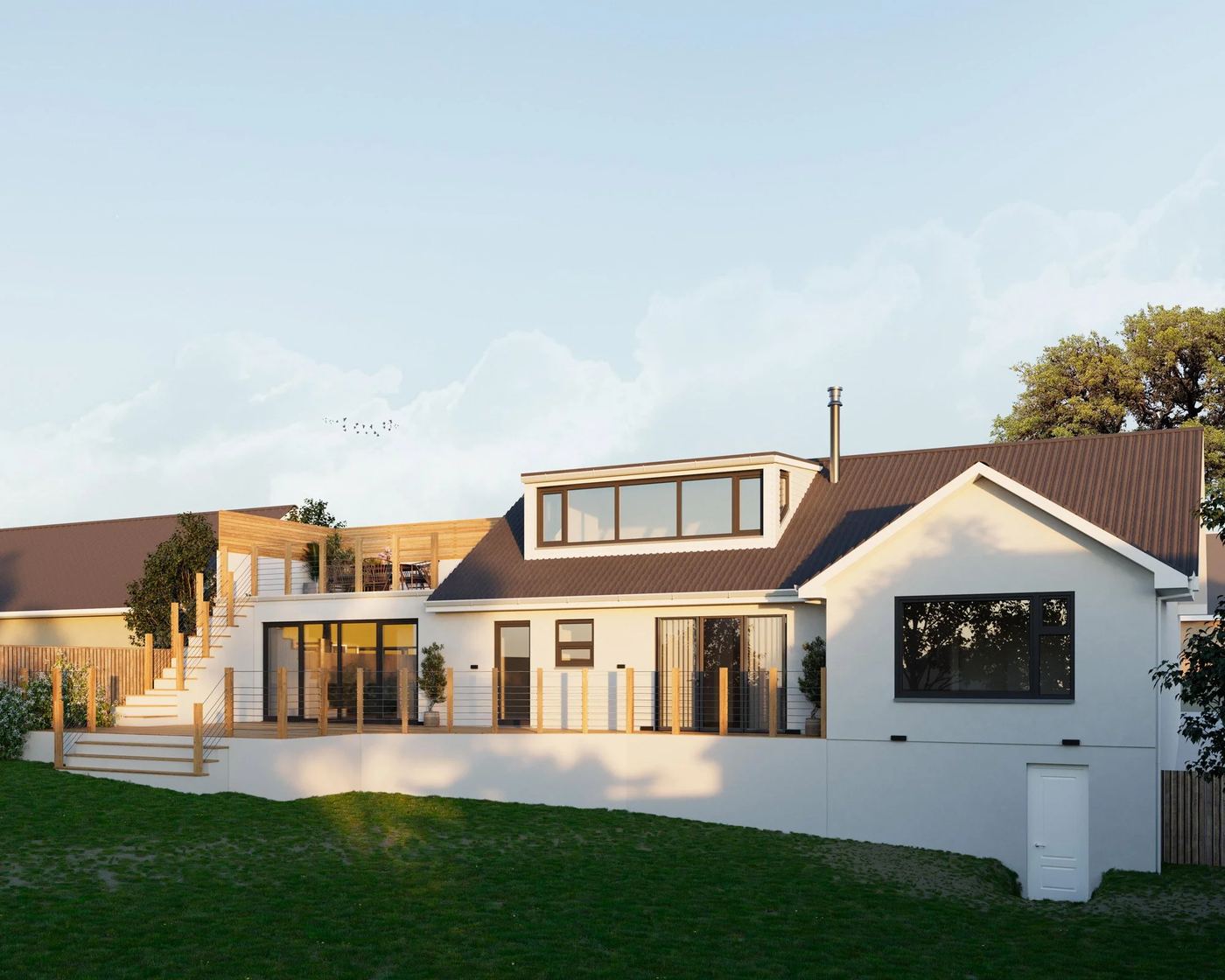
- Single-storey rear extensions can project up to 3 metres from the back wall of an attached house (a semi or terrace), or 4 metres for a detached house, with a maximum height of 4 metres.
- Under the larger home extension scheme, those depths can increase to 6 metres for an attached house or 8 metres for a detached one. You have to notify Cornwall Council first, neighbours are invited to comment, and the council decides whether the impact on them is acceptable. This is known as prior approval.
- Rear extensions of more than one storey can project up to 3 metres and must be at least 7 metres from the rear boundary.
- Side extensions must be single storey, no more than 4 metres high, and no wider than half the width of the original house.
- Nothing can go forward of the front of the house, or of a side wall that faces a road.
- If any part of the extension is within 2 metres of a boundary, the eaves can’t be higher than 3 metres.
- Extensions and outbuildings together can’t cover more than half the land around the original house.
- Materials should look similar to the existing house (conservatories are an exception).
- Upper-floor windows in side walls must be obscure-glazed and fixed shut below 1.7 metres from the floor.
There are more detailed conditions than these, so treat the list as a guide to whether permitted development is likely, not a final answer.
Why much of Cornwall is different
Over a quarter of Cornwall lies within the Cornwall National Landscape (formerly the Cornwall Area of Outstanding Natural Beauty). The county also has many conservation areas and large parts of the Cornwall and West Devon Mining Landscape World Heritage Site. Together these are known as Article 2(3) land, and permitted development rights are reduced there:
- Side extensions always need planning permission.
- Rear extensions of more than one storey always need planning permission.
- Cladding the outside of the house in stone, timber, render, tiles or similar needs planning permission.
- The larger home extension scheme isn’t available.
Coastal and rural homes are especially likely to be affected. Cornwall Council’s online mapping shows where these designations apply, or we can check for you.
When you won’t have permitted development rights at all
- Listed buildings: most works need listed building consent, whatever their size.
- Homes covered by an Article 4 direction, which removes some or all rights in a particular area.
- Many newer homes, where the original planning permission removed permitted development rights by condition. This is common on estates built in the last few decades and is easy to miss.
- Flats and maisonettes.
- Barn conversions and other homes created under certain permitted development change-of-use rules.
The planning history of the property, which is available from Cornwall Council, will show whether any conditions or directions apply.
Is a Lawful Development Certificate worth it?
If your extension falls within permitted development, you can apply to Cornwall Council for a Lawful Development Certificate. It isn’t compulsory, but it confirms in writing that the extension is lawful. That’s valuable when you come to sell, because buyers’ solicitors will ask, and it avoids any later dispute about whether the rules were met. We recommend one for most permitted development extensions.
Building regulations still apply
Permitted development is only about planning. Almost every extension still needs building regulations approval, which covers how it’s built: structure, insulation, fire safety, drainage and so on. Our guide to building regulations explains how that works.
How we can help
At the first visit we check your home’s designations, planning history and remaining permitted development allowance, and tell you which route applies. If you need planning permission, we prepare and submit the application. If you don’t, we can apply for a Lawful Development Certificate and go straight to the building regulations drawings.
This guide gives general information for homes in England and isn’t a substitute for advice on your own property. Rules change, so check the current position before relying on it.