Guide · House extensions
How much does a house extension cost in Cornwall?
What actually drives the cost of an extension, the costs people forget to budget for, and the Cornwall-specific factors that can push a price up.
It’s the first question almost everyone asks, and the honest answer is that it depends heavily on a handful of decisions. Two extensions of the same size on the same street can differ in cost by tens of thousands of pounds. Knowing what drives the price helps you set a realistic budget and spend it where it counts.
How builders price extensions
Extension costs are often talked about per square metre of floor area, which is useful for a first rough idea. But builders price the actual job, item by item, and the only way to get prices you can rely on and compare is to give several builders the same complete set of building regulations drawings. Quotes based on a sketch tend to leave out costly items, and those reappear as extras once work has started.
What pushes the price up or down
- Size and number of storeys. A two-storey extension costs more in total but often works out cheaper per square metre, because the foundations and roof serve twice the floor area. Our guide to single vs two-storey extensions goes into this.
- Structural work. Opening up the back of the house or removing internal walls means steel beams, temporary supports and an engineer’s design. It’s often worth it, but it’s a significant cost.
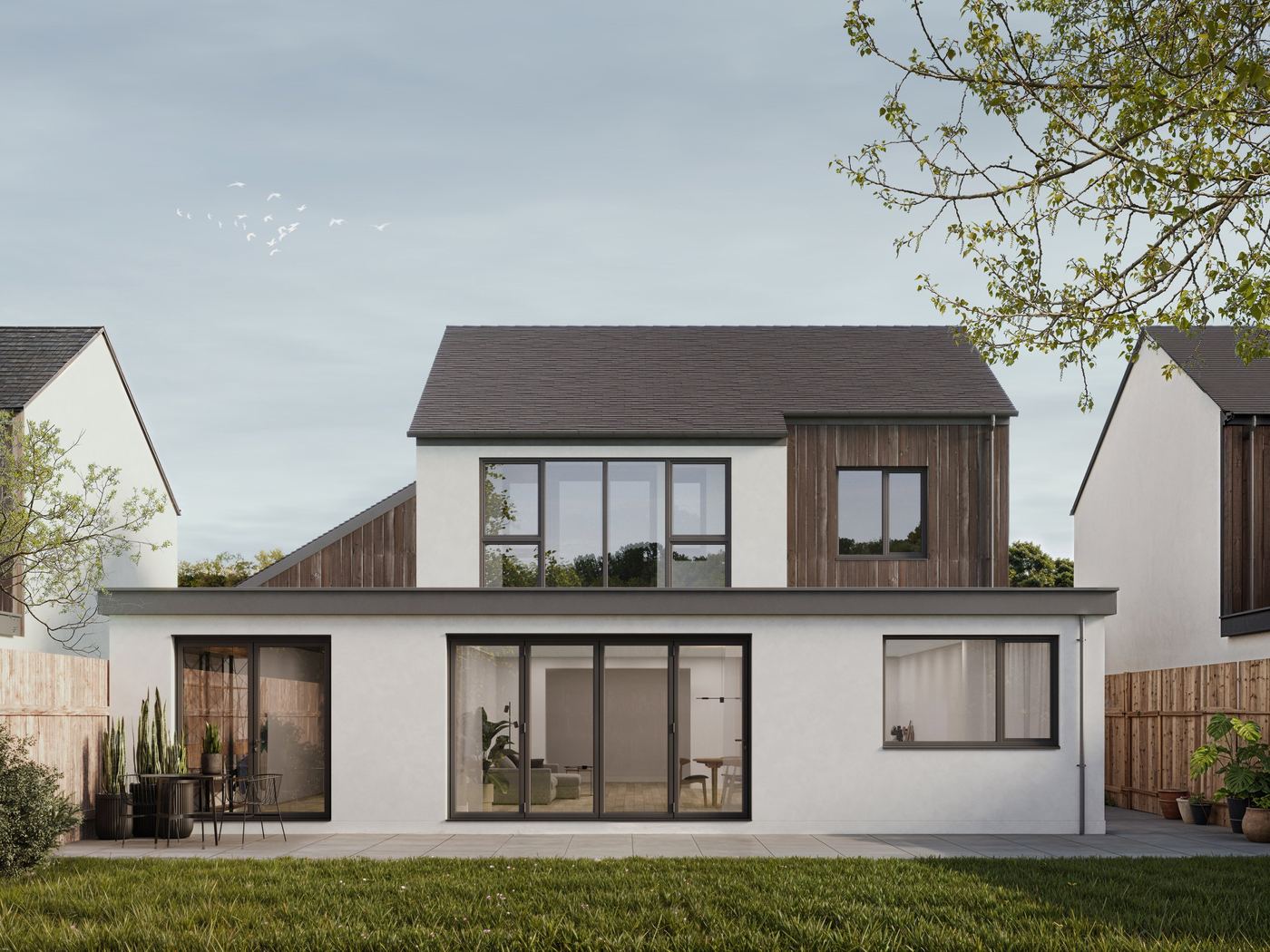
- Glazing. Large sliding or bifold doors, roof lanterns and frameless glass are among the most expensive elements. Large areas of glass may also need extra energy calculations to pass building regulations.
- Ground conditions. Much of Cornwall has a mining history, so a mining search is sensible, and some sites need deeper or specially designed foundations. Sloping sites and rock add cost too.
- Access. Narrow lanes, steep drives or no rear access mean more labour, smaller deliveries and sometimes cranes.
- Exposure. Coastal sites face severe wind-driven rain, which affects how walls, render and glazing need to be detailed and specified.
- Drainage. Connecting a new bathroom or kitchen to the mains sewer is usually simple, but many rural homes are on septic tanks or treatment plants that may need upgrading.
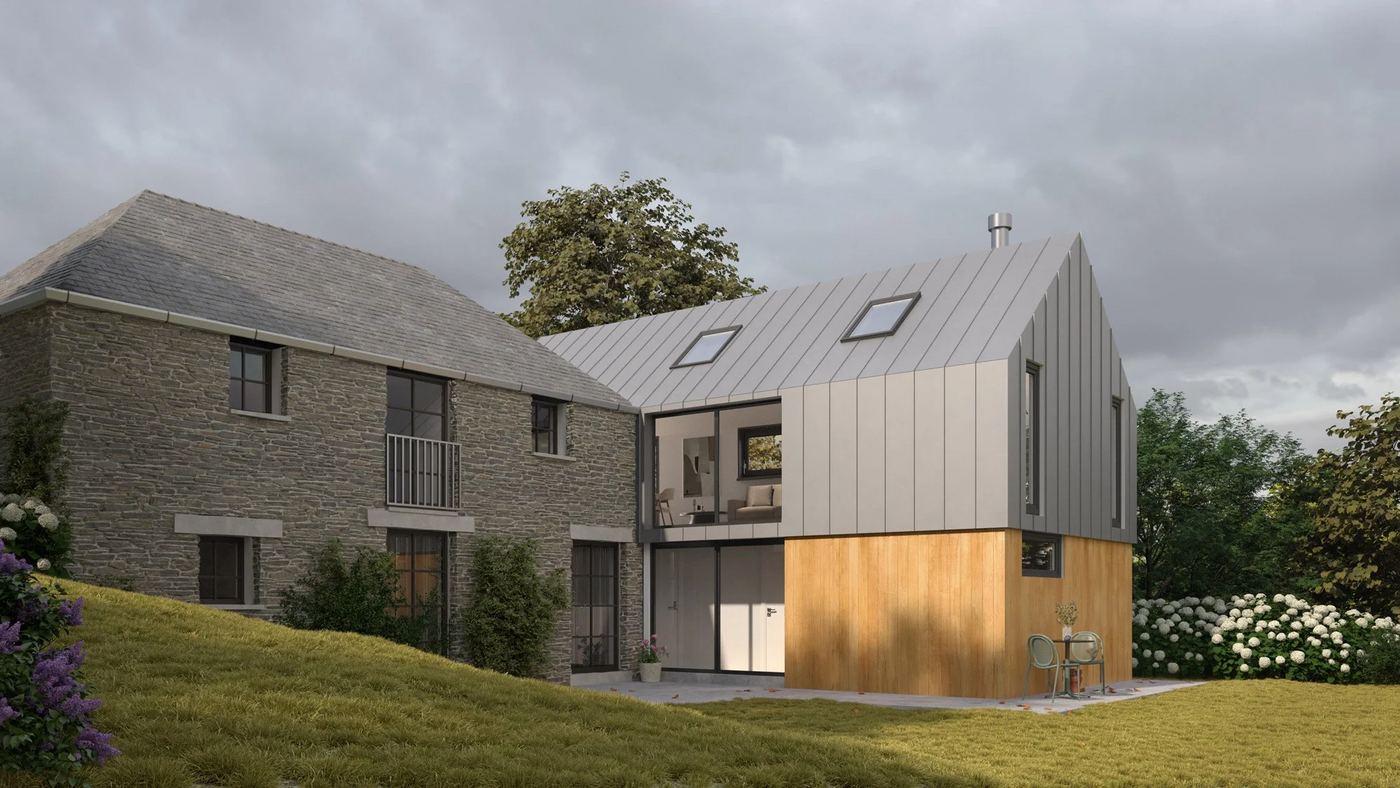
- Materials. Matching natural stone and slate, or using zinc and hardwood cladding, costs more than render and concrete tiles.
- Specification inside. The kitchen, bathrooms, flooring and heating can easily be a third of the total.
Costs beyond the build
These are easy to forget when setting a budget:
- Measured survey, design, planning drawings and building regulations drawings.
- Planning application fee, which is set nationally (check the current fee on the Planning Portal).
- Structural engineer’s calculations.
- Building Control fees, from Cornwall Council or a registered private approver.
- Party wall surveyor’s fees, if you’re building on or near a shared boundary.
- Searches and surveys, such as a mining search or ground investigation where needed.
- VAT. Most work on extensions to existing homes is charged at the standard 20%.
- A contingency. Allow 10 to 15% of the build cost for the unexpected, especially with older properties.
How to keep costs under control
- Make decisions early. 3D visuals help you settle the layout, glazing and materials before anything is priced, which is far cheaper than changing your mind on site.
- Get complete drawings before asking for quotes, so every builder prices the same thing.
- Get at least three quotes, and compare what’s included, not just the totals.
- Keep the shape simple. Straight walls and simple roof forms cost less to build than complicated ones.
- Avoid changes once work starts. Variations on site are the most common reason projects go over budget.
Getting a realistic figure for your home
At the first visit we can give you a rough idea of what similar projects have cost locally, and help you decide where your budget makes the most difference. Once the building regulations drawings are complete, you’ll be able to get firm prices from builders.
This guide gives general information for homes in England and isn’t a substitute for advice on your own property. Rules change, so check the current position before relying on it.