Guide · Planning permission
Extending a home in a conservation area or National Landscape in Cornwall
What changes when your home is in a conservation area, the Cornwall National Landscape or the Mining World Heritage Site, what planners look for, and how to give your application the best chance.
A large share of Cornwall’s homes sit within a protected area of some kind. That doesn’t mean you can’t extend. It means the design needs more care, the application needs a stronger explanation, and fewer extensions can be built without permission.
The main designations
- Conservation areas: parts of towns and villages designated by Cornwall Council for their special architectural or historic character.
- The Cornwall National Landscape: the new name, since 2023, for the Cornwall Area of Outstanding Natural Beauty. It covers over a quarter of the county, including much of the coast.
- The Cornwall and West Devon Mining Landscape World Heritage Site: areas recognised for their mining heritage, from engine houses to miners’ cottages.
- Listed buildings: individual buildings of special interest, which need listed building consent for most changes, inside or out.
What changes for permitted development
In conservation areas, National Landscapes and the World Heritage Site, permitted development rights are reduced. Side extensions, rear extensions of more than one storey and external cladding all need planning permission, and the larger home extension scheme isn’t available. Our guide to permitted development covers the full limits.
In conservation areas there are other controls too: you need to give the council six weeks’ notice before doing works to most trees, and demolishing a significant part of a building usually needs permission.
What planners look for
- Character: whether the extension preserves or enhances the character of the area and the building.
- Scale: extensions that stay subordinate to the original house, rather than overwhelming it, are generally viewed more favourably.
- Materials and detailing: natural slate, local stone, render and timber all have a place, but they need to be chosen and detailed with the setting in mind.
- Landscape and views: in the National Landscape, how the extension sits in the wider landscape, including from the coast path or across a valley, matters as much as the building itself.
- Heritage significance: in the World Heritage Site, planners consider the effect on the mining landscape, including views of engine houses and other key features.
Traditional or contemporary?
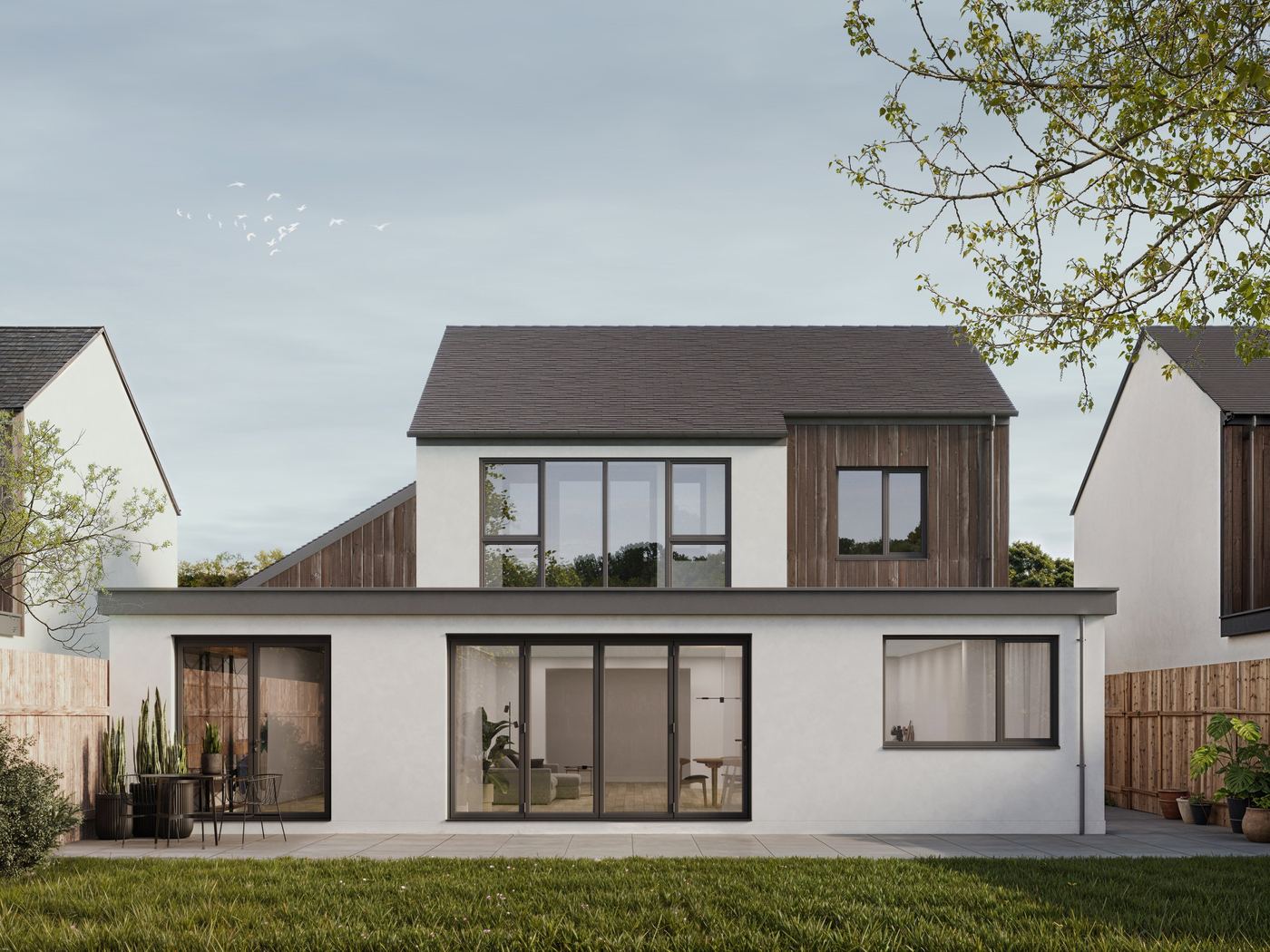
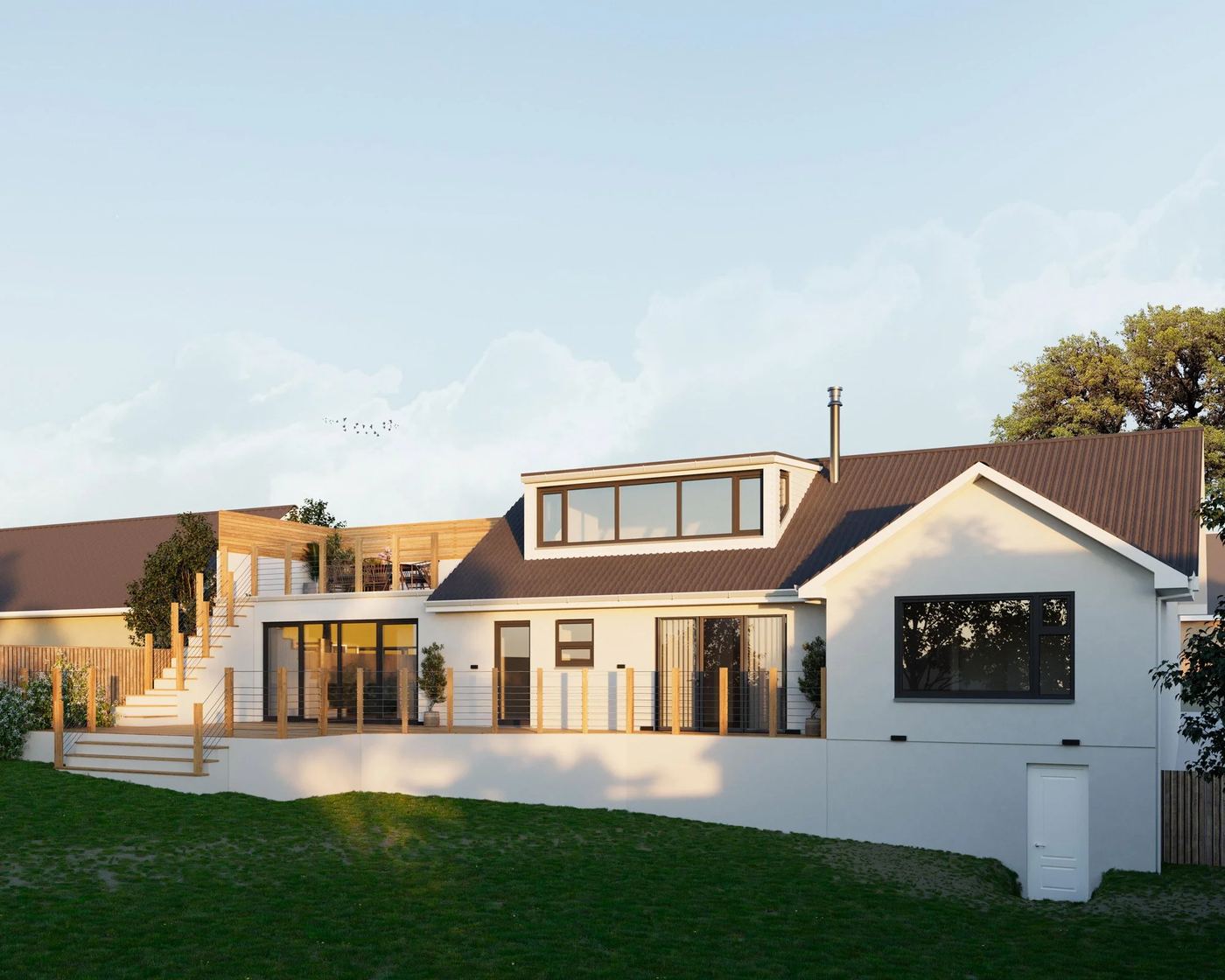
There’s no single right answer. Some extensions succeed by matching the original house in stone, slate and proportion. Others succeed by being clearly modern, in zinc, timber or glass, but carefully scaled so the original building still reads as the main element. Both approaches can be approved; what matters is that the choice is deliberate and well justified.
Our mining cottage at Killifreth is an example. Two earlier applications for a two-storey extension had been refused for blocking views of the engine house. We proposed a single-storey wing set down into the ground with a sedum roof, so the landscape appears to run on past it, and it was approved first time.
Supporting documents
Applications in these areas usually need more supporting information, such as a Heritage Statement explaining the significance of the building or area and how the design responds to it, and sometimes a Design and Access Statement. 3D visuals are especially useful here, because they show planners exactly how the extension will look in its setting.
Improving your chances
- Look at the planning history of your property and neighbouring ones, to see what has been approved or refused nearby and why.
- Consider the design from the most sensitive viewpoints, not just from your own garden.
- Think about pre-application advice for larger or more sensitive proposals.
- Explain the design clearly. A well-argued application gives the planning officer the reasons they need to support it.
This guide gives general information for homes in England and isn’t a substitute for advice on your own property. Rules change, so check the current position before relying on it.